
Gender and sexuality workshop

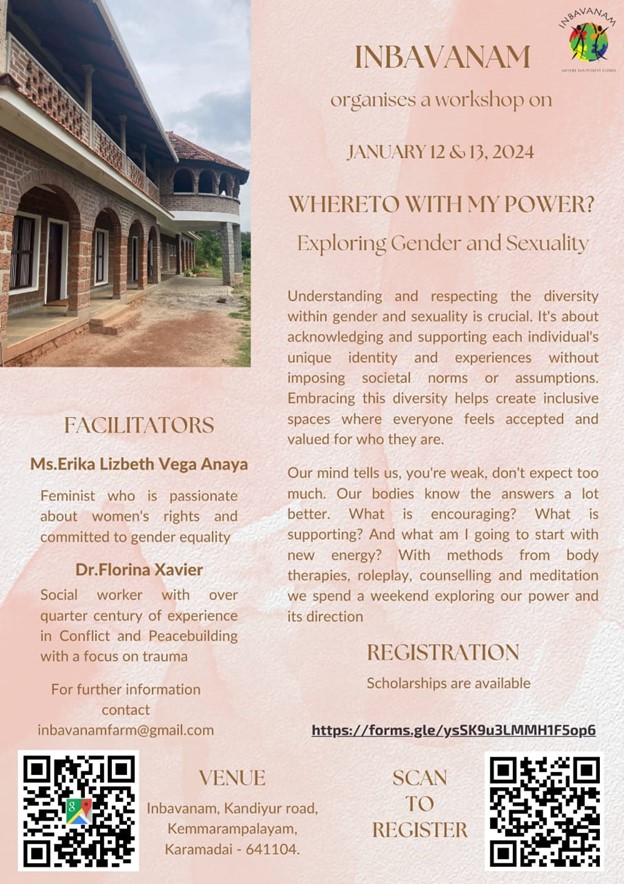
An exclusive workshop for women on Gender and Sexuality was organized by Inbavanam, on the 13th and 14th of January 2024. 15 women participants took part in the workshop. Dr.Florina, social worker with over quarter century of experience in Conflict and Peacebuilding with a focus on trauma, facilitated the workshop and Ms.Erika Lizbeth Vega Anaya, feminist who is passionate about women's rights and committed to gender equality, co-facilitated the workshop.
The gender and sexuality workshop stood as a testament to the collective power of shared experiences, aiming to create a supportive space where women can navigate the complexities of gender and sexuality with resilience and solidarity. The workshop captured the essence of how collective strength has not only dismantled stereotypes but also paved the way for a more resilient and affirming exploration of these critical facets of identity.


In a groundbreaking gender and sexuality session, the facilitator creatively prompted participants to embody their mothers symbolically, fostering empathy. This unconventional icebreaker paved the way for a deep exploration of personal perspectives, navigating the complexities of gender and sexuality and promoting open dialogue. The approach challenged preconceptions, nurtured inclusivity, and encouraged a compassionate understanding of diverse viewpoints. Building on the symbolic embrace of mothers, the gender and sexuality session delved deeper into childhood experiences, prompting introspection on societal influences. This reflective space aimed to empower individuals to embrace their authentic selves and appreciate diverse journeys, fostering nuanced discussions. In another groundbreaking session, dance and music were intertwined to empower participants, using compositions by women. This celebration of feminine creativity transcended gender boundaries, encouraging self-expression and enriching the understanding of gender and sexuality experiences.
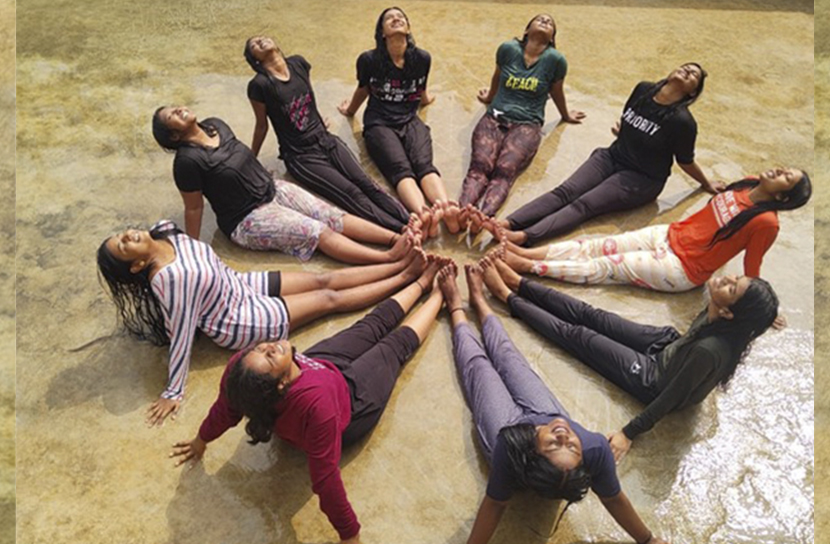
On the second day, in a body positivity workshop on gender and sexuality, participants explored the unconventional idea of letting their vagina "breathe" in sunlight, metaphorically emphasizing liberation and autonomy over their bodies. The participants experienced a profound commemorative ritual, blending ancestral connections with contemporary exploration. The workshop's unique mix of tradition and modern dialogue provided a holistic space for reflecting on identity, bridging personal narratives with the collective tapestry of cultural heritage. Thus, the gender and sexuality workshop that embraced womanhood emerged as a pioneering and transformative experience for every participant involved. The collective act of letting frustrations out became a powerful expression of empowerment, unity, and resilience. Through a unique blend of introspection, communal support, and the cathartic release of frustrations, the workshop acted as a catalyst for profound self-exploration.
Silambattam and self-defense training workshop
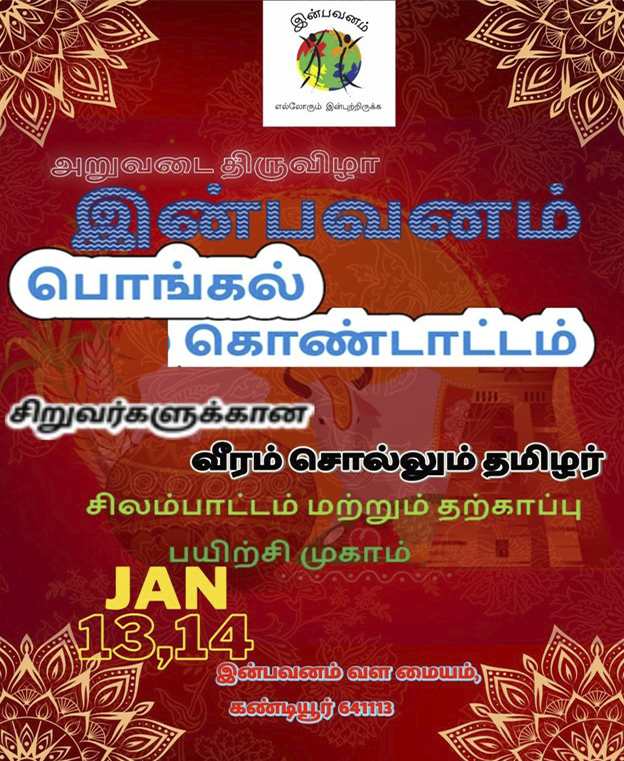
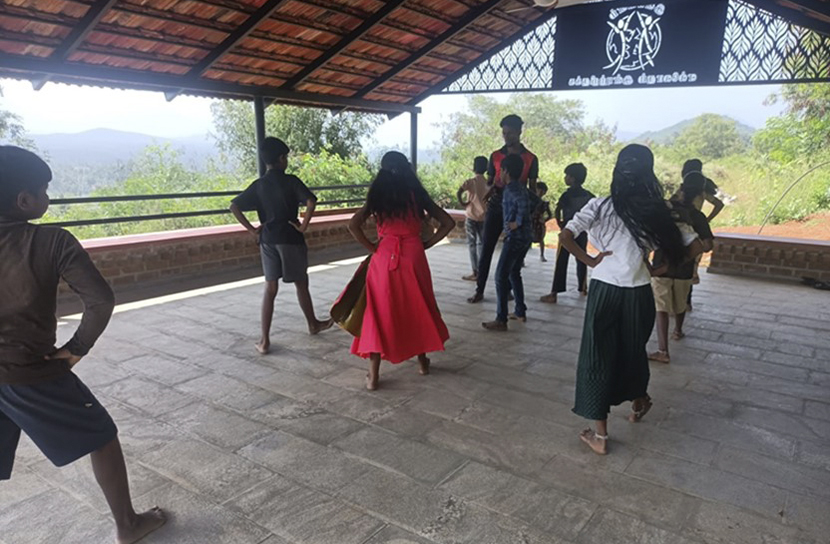
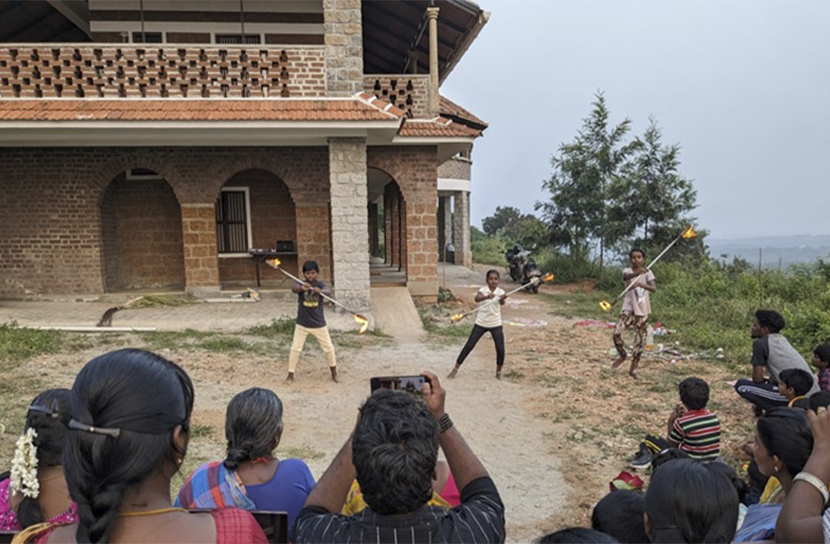
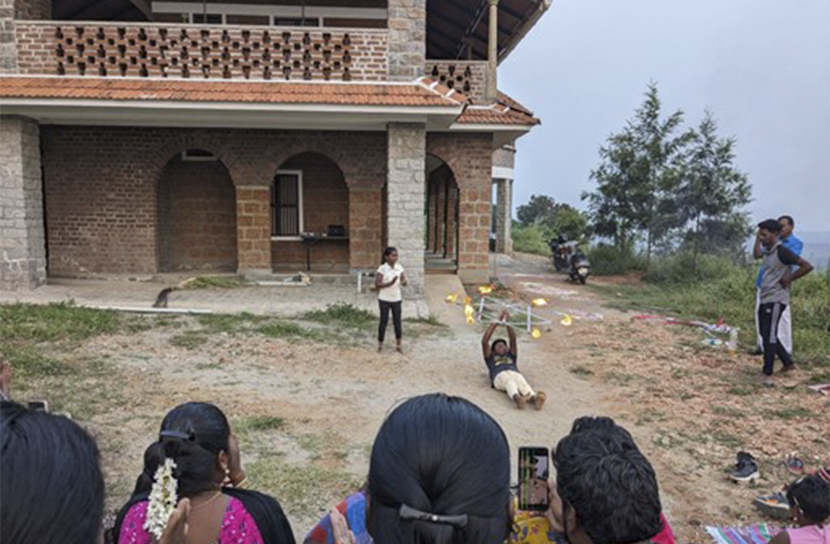
A three-day Silambattam and self-defense training workshop for children took place at the Outdoor Training Hall of Inbavanam Resource Center on January 13th, 14th, and 15th. Facilitated by Mr. Nikesh, a Master trainer with 15 years of Silambattam experience. 13 children from Kandiyur village enthusiastically engaged in learning traditional martial arts techniques of this ancient Tamil Nadu art form.
Day one of the Silambattam and Self-defense training workshop saw enthusiastic participation from children in grades 5th to 9th from Kandiyur Village. The session began with an introduction to the workshop's objectives, emphasizing the importance of self-defense skills. Participants delved into the ancient art of Silambattam, covering warm-up exercises, ice-breaking activities, basic stances, hand movements, footwork, and two solo routines. The training continued with street theatre basics by Mr. Muthu from Kalam Art Academy and the continuity of Silambam by Mr. Nikesh.
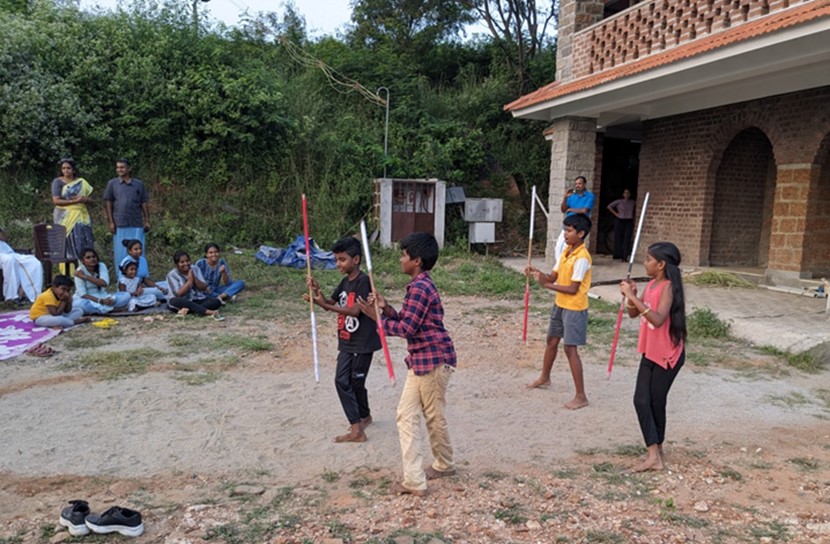
On the second day, the workshop focused on intensive training and self-defense drills. Two additional solo routines with intricate hand and feet movements were taught, incorporating the use of cane sticks. The trainer emphasized hand grip positions and feet movements, dividing the children into smaller groups for personalized attention. Advanced Silambattam techniques were demonstrated and practiced under supervision. The self-defense session covered situational awareness, basic strikes, and cane rotation techniques, empowering children with practical knowledge and confidence. Interactive drills and role-playing scenarios created a positive learning environment.
The workshop's final day emphasized refining Silambam basics through group exercises and games, highlighting collaboration in self-defense. Children demonstrated their skills in a friendly showcase, fostering a sense of accomplishment. The closing ceremony awarded certificates to each child, recognizing their dedication. Inviting parents and community members enhanced community involvement in promoting the importance of self-defense education for children.